
Peptides & Testosterone Research
Peptides for Testosterone: What the Research Shows
Medically reviewed by our clinical team · Updated March 2026

This question comes up in nearly every conversation we have with patients looking to get that edge. Men want to know which peptides work fastest, which ones increase testosterone levels, and whether any might actually lower them. The answers are more nuanced than most online sources let on and far more promising.
When used correctly and at the right dosage, peptides for testosterone support often work indirectly: improving metabolism, accelerating recovery, and reducing inflammation to create the conditions where your testosterone can rebound on its own. Low testosterone isn’t always a “testosterone problem.” For many men, it’s a metabolic problem driven by excess body fat, inflammation, insulin resistance, and poor recovery. That’s the real reason certain types of peptide therapy can move the needle on testosterone without ever touching it directly.
What Are Peptides, and How Does Peptide Therapy Work?
Peptides are short chains of amino acids that your body produces naturally. Think of them as biological messengers that tell your cells to turn certain processes on or off. They can influence everything from metabolism and inflammation to recovery, healing, hormone production, and cellular repair.
Peptide therapy has been around longer than most people realize. The first peptide ever isolated was insulin, back in 1921, a polypeptide made of 51 amino acids that regulates glucose metabolism. It was also the first protein to have its amino acid sequence determined (1951) and the first to be fully synthesized. Hundreds more have been studied in human trials since then.

What makes peptides valuable in modern wellness medicine is that, rather than replacing hormones like testosterone directly, they work by nudging your body’s own systems to function more efficiently. That distinction matters, especially for men who want to support their hormonal health without jumping straight to testosterone replacement therapy (TRT).
GLP-1 Medications: How Weight Loss Can Normalize Low Testosterone
GLP-1 (glucagon-like peptide-1) medications such as semaglutide are FDA-approved for chronic weight management and type 2 diabetes. But emerging research shows they also have a meaningful impact on testosterone because of how dramatically they improve metabolic health.
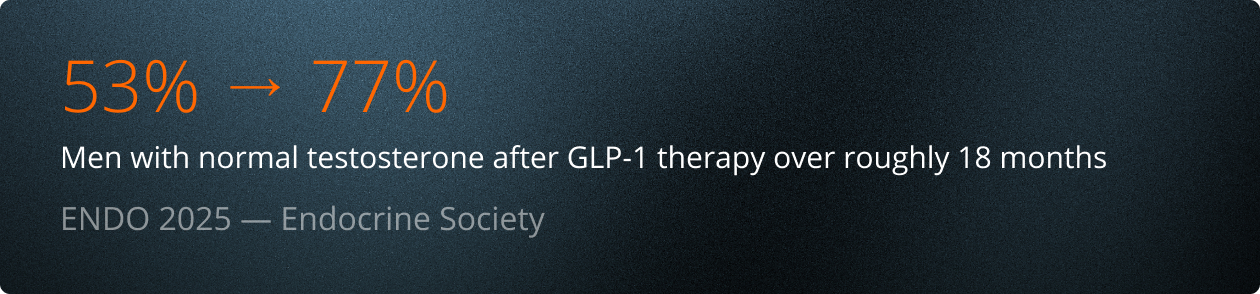
A major study presented at ENDO 2025, the Endocrine Society’s annual meeting, found that GLP-1 therapy increased the percentage of men with normal testosterone from 53% to 77% over roughly 18 months. The researchers noted that anti-obesity medications can significantly raise testosterone levels and improve health outcomes for men with obesity or type 2 diabetes, conditions closely tied to hormonal decline.
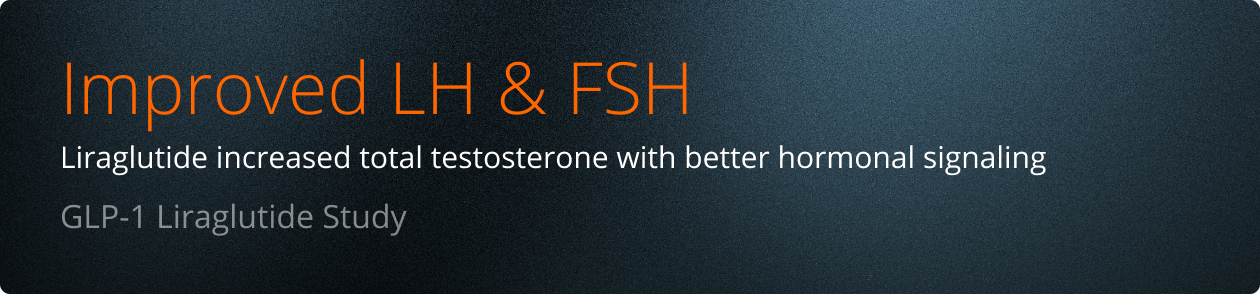
A separate study on liraglutide (another GLP-1 medication) found increased total testosterone, improved sexual function, and better LH and FSH levels, the hormones responsible for signaling the testes to produce testosterone in the first place.
The mechanism is straightforward: losing visceral fat reduces systemic inflammation, restores hormonal signaling, and allows testosterone to rise naturally. For men whose low T is tied to weight gain, insulin resistance, or metabolic syndrome, GLP-1 therapy essentially helps the body get out of its own way.

Tirzepatide: The Strongest Metabolic Impact, The Strongest Testosterone Response
Tirzepatide is a dual GIP/GLP-1 agonist, meaning it activates two separate pathways simultaneously. GIP stands for glucose-dependent insulinotropic polypeptide, and combining it with GLP-1 activity produces the greatest weight loss of any medication currently in its class.
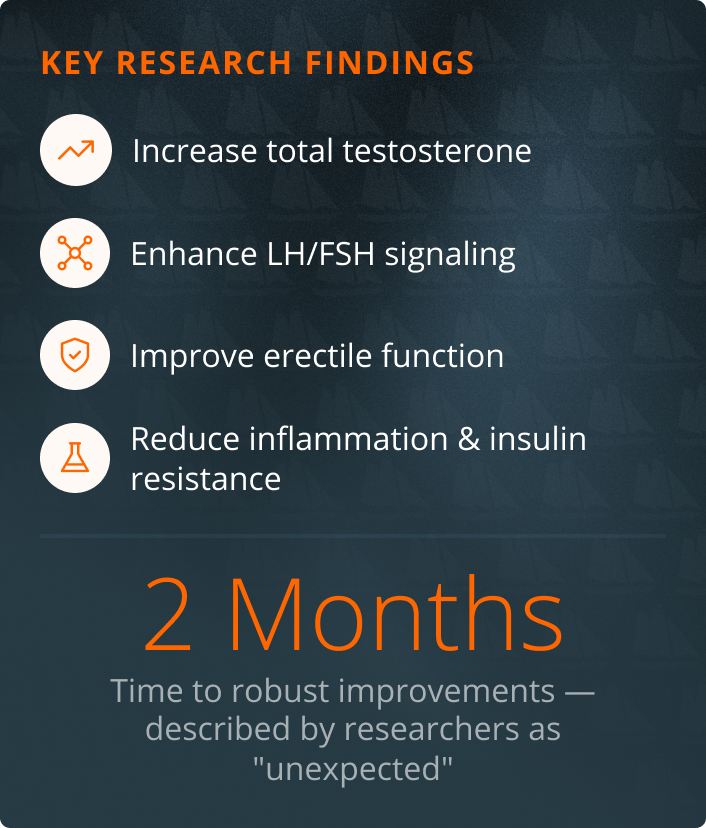
New research in men with metabolic hypogonadism, low testosterone driven by weight gain, insulin resistance, or metabolic dysfunction rather than a problem with the testes themselves, shows tirzepatide can increase total testosterone, improve erectile function, enhance LH/FSH signaling, and reduce both inflammation and insulin resistance. Researchers involved in the study described the speed of results as unexpected: robust improvements in total and bioavailable testosterone appeared within just two months of starting treatment.

For men whose low testosterone is rooted in metabolic dysfunction, tirzepatide may help correct the underlying cause rather than simply treating the symptom. That makes it a meaningful option for men who want to explore whether their natural testosterone production can be restored before turning to TRT.
Sermorelin for Men: Supporting Growth Hormone to Improve Testosterone Naturally
Sermorelin takes a different approach entirely. It doesn’t act like TRT, and it doesn’t target testosterone directly. Instead, it works by optimizing the foundation – sleep, body composition, and recovery – so testosterone can do its job the way it’s supposed to.
Sermorelin is a growth hormone-releasing hormone (GHRH) analogue consisting of the first 29 amino acids of the naturally occurring hormone. It stimulates the pituitary gland to produce more of your own growth hormone (GH), which leads to higher IGF-1 levels, better recovery, fat loss, and an improved metabolic environment.

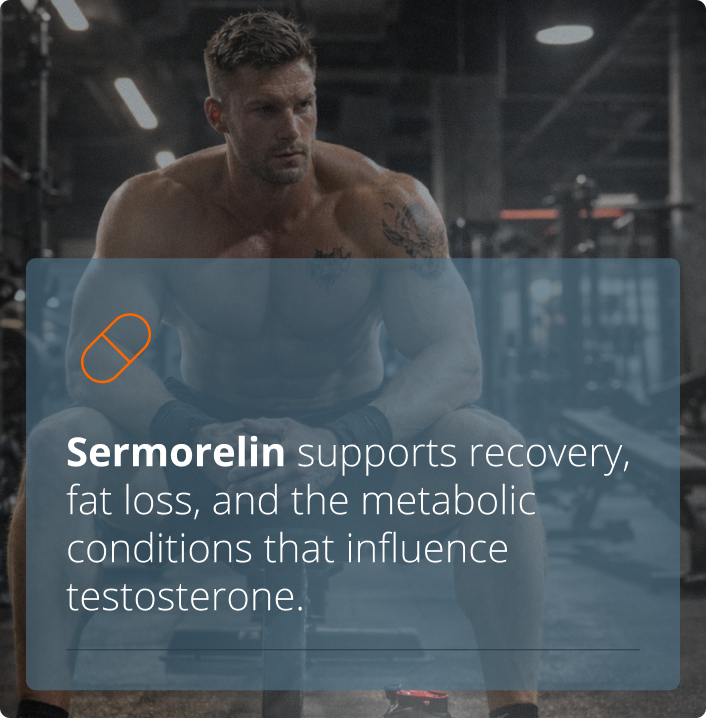
Research on GHRH analogues like sermorelin shows they can improve IGF-1 and lean mass, and enhance the hormonal conditions that influence testosterone levels. Studies have also found a positive effect on libido in men. For patients who feel sluggish, recover slowly from workouts, or want a metabolism-first approach to hormonal health, sermorelin is often a strong starting point.
What About Other Types of Peptides?
Many other peptide names are circulating online, some linked to fat loss, libido, performance, or recovery. Peptides may be the answer for a lot of metabolic issues, and some believe they may well be the future of medicine. Men often ask about the best peptide to increase testosterone or the best peptide stack for their specific goals, and the honest answer is that it depends entirely on your labs, your metabolic health, and where your hormones currently stand. Some of these are not FDA-approved, so we’ve focused this article on those with established clinical research. That said, you can explore the full range of peptide therapies we offer at Lowcountry Male and schedule a consultation to discuss what’s safe, effective, and appropriate based on your labs and goals.


Nutrition and Supplements That Support Healthy Testosterone
Peptide therapy works significantly better when paired with proper nutrition. Food directly affects hormone production, inflammation, and metabolic signaling, and neglecting the basics can undermine even the most targeted treatment plan.
In general, these dietary principles support healthy testosterone production: higher protein intake supports LH signaling and recovery; healthy fats provide the cholesterol that serves as the raw material for testosterone synthesis; micronutrients like zinc, magnesium, selenium, and vitamin D are essential for hormone production; and limiting sugar and refined carbohydrates helps stabilize insulin, which is critical for maintaining testosterone levels.


Evidence-Based Supplements Worth Discussing with Your Provider
Our providers have deep expertise in supplementation for testosterone support. While a lab panel is always the best starting point, the following are commonly recommended based on clinical evidence:
for hormone regulation
for hormone balance and reduced inflammation
for reduce inflammation, which directly suppresses testosterone
for when clinically indicated and monitored
for androgen production
for sleep quality and cortisol control
for cortisol reduction and mood support
These won’t replace testosterone therapy when levels are genuinely deficient, but they meaningfully support the entire hormonal system.
Are Peptides Safe? What to Know Before Starting
Safety depends entirely on which peptide you’re considering, your personal health history, and whether you’re working with a qualified provider. The FDA-approved options discussed here – GLP-1s, tirzepatide, and sermorelin – have well-established safety profiles when used appropriately. Side effects vary by compound and are typically manageable under medical supervision.

Ready to Find Out If Peptide Therapy Is Right for You?
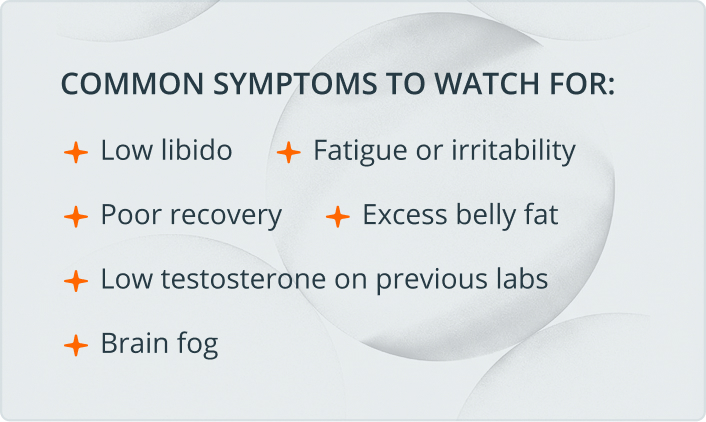
If you’re experiencing low libido, fatigue or irritability, poor recovery, excess belly fat, brain fog, or low testosterone on previous labs, the first step is a comprehensive hormone and metabolic panel. Many of our patients are curious about what peptide injections look like before and after treatment, and the best way to see that picture clearly is through your labs. Lowcountry Male keeps lab pricing competitive and because blood draws happen right in our clinic, there’s no need to visit an external facility like LabCorp. We also offer military and first responder discounts, so reach out to ask about current pricing and specials.

From there, our providers help you build a personalized plan that may include TRT (when appropriate), sermorelin, GLP-1 or tirzepatide, targeted supplementation, and nutrition and lifestyle optimization. Every man’s hormones are different; your treatment should be too.
Your personalized plan may include:
Located in the Lowcountry region of South Carolina, Lowcountry Male is a dedicated peptide clinic serving men throughout the area who are ready to take their health seriously. Wondering how to get peptides safely and under proper medical supervision? Schedule your consultation today and find out which peptide therapies, if any, are the right fit for where you are right now.